
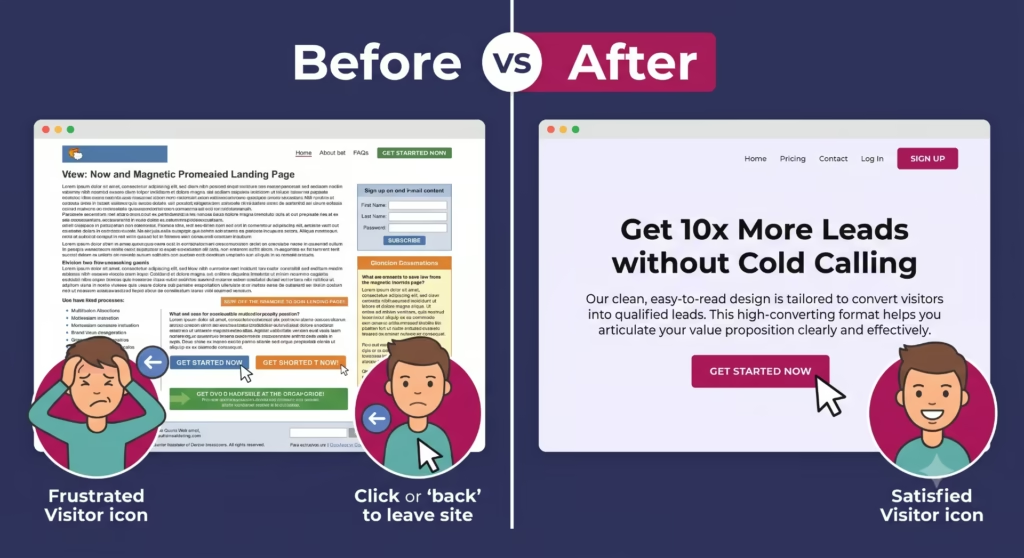
Your ads are working but your website is working against you. If you’re a service business owner wondering why your ROI is low or why leads aren’t coming in, you likely lack a high converting landing page. The problem is most often not your ads—it’s where you are sending that expensive traffic.
I’ve worked with over 500 businesses across different niches, and I’ve seen the same pattern repeat itself over and over. Business owners spend thousands on Facebook ads, Google ads, Instagram ads, and SEO. They get clicks. They get traffic. But they don’t get leads. They don’t get sales. And they don’t understand why.
Here’s the truth most service businesses miss: your landing page could be the silent leak burning through your ad budget. And no amount of AI tools, design tweaks, or marketing hacks can fix it if the foundation is broken.
Let me show you what’s actually happening, why it matters, and what you can do about it.
__________________________________________________
The Hidden Truth Most Service Businesses Miss
If Your Ads Are Working but Your Website Isn’t...
When conversions drop, most business owners blame their ads. They think the targeting is wrong. The creative is bad. The platform isn’t working. So they pause campaigns, change audiences, and burn more money testing new variations.
But here’s what I’ve learned after auditing hundreds of websites: the ads are usually fine. The targeting is usually fine. The problem is most often the landing page where all that traffic ends up.
Think about it this way. You spend $5 per click on a Google ad. Someone searches “chiropractor near me,” sees your ad, clicks it, and lands on your website. What happens next?
If your landing page is confusing, slow, or doesn’t build trust, that visitor leaves in 3 seconds. You just paid $5 for nothing. Multiply that by 100 clicks per day, and you’re burning $500 daily on traffic that never converts.
According to WordStream, the average landing page conversion rate across industries is around 4%. But the top-performing landing pages convert at 10% or higher. That gap is where most of your ad spend is going to die.
Why Your Marketing Agency Won’t Tell You This
Here’s something most agencies won’t say out loud: they get paid for traffic, not conversions.
When you hire a marketing agency to run your ads, their job is to drive clicks. They optimize for cost per click, click-through rate, and ad spend efficiency. But what happens after the click? That’s not their problem.
Most agencies don’t audit your landing page. They don’t test your conversion flow. They don’t care if your website is built to convert. They just want to show you a dashboard with lots of clicks and impressions so you keep paying them.
This is why so many service businesses burn through $10,000, $20,000, or even $50,000 on ads with nothing to show for it. The traffic is there. The conversion system isn’t.
__________________________________________________
The Real Cost of a Bad Landing Page
What 90% Ad Spend Waste Actually Looks Like
Let me show you the math most business owners don’t see.
Say you’re running Google ads for your chiropractic practice. Your cost per click is $5. You’re getting 100 clicks per day. That’s $500 daily, or $15,000 monthly.
If your landing page converts at 2%, you’re getting 2 new leads per day, or 60 per month. Your cost per lead is $250.
If your landing page converts at 10%, you’re getting 10 new leads per day, or 300 per month. Your cost per lead drops to $50.
Same ad spend. Same traffic. Same targeting. The only difference is the landing page. And that difference is $200 per lead, or $12,000 per month in wasted ad spend.
This is what I mean when I say your website burns 90% of your ad spend. It’s not that your ads are broken. It’s that your landing page is leaking conversions like a broken faucet.
The Trust Gap (And Why Traffic Without Trust Is Noise)
Here’s the deeper issue most businesses miss: traffic without trust is noise.
You can drive thousands of visitors to your website every month. But if they don’t trust you, they don’t convert. They don’t book. They don’t buy. They just leave.
This is what I call the trust gap. And it’s the silent killer of most service business marketing.
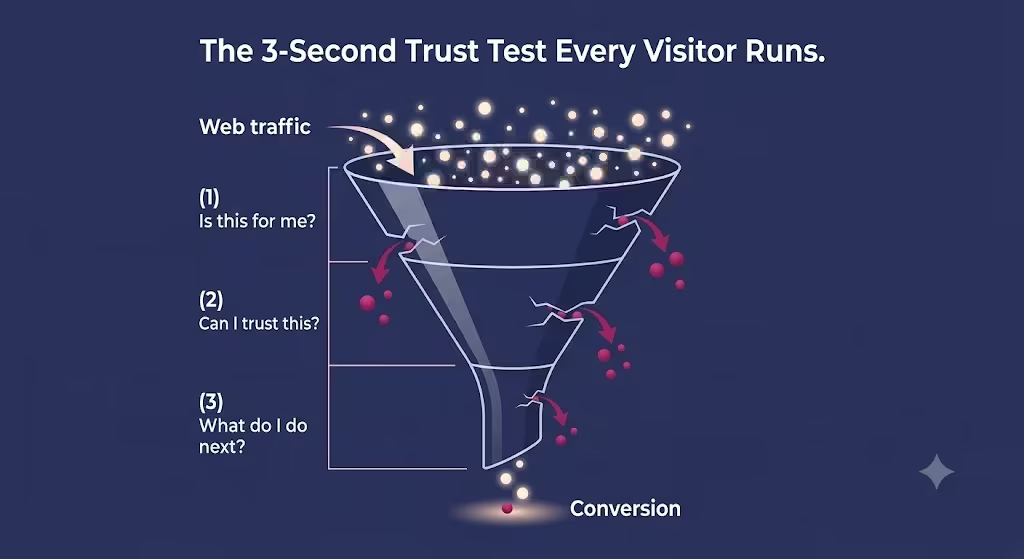
When someone lands on your website, they’re asking themselves three questions in the first 3 seconds:
- Is this for me?
- Can I trust this person?
- What do I do next?
If your landing page doesn’t answer those questions clearly, quickly, and convincingly, the visitor is gone. And you just paid for that click.
This is why I built my entire business around the idea that websites are dead. What service businesses need is a Magnetic Growth System, not just a pretty website. The system builds trust before it asks for the sale. It bridges the gap between traffic and conversion.
__________________________________________________
The Anatomy of a High Converting Landing Page
The 15 Building Blocks Every Converting Page Needs
Most business owners think a landing page is just a headline, some text, and a button. But high-converting landing pages are built from 15 specific building blocks, arranged in the right sequence, with the right psychology.
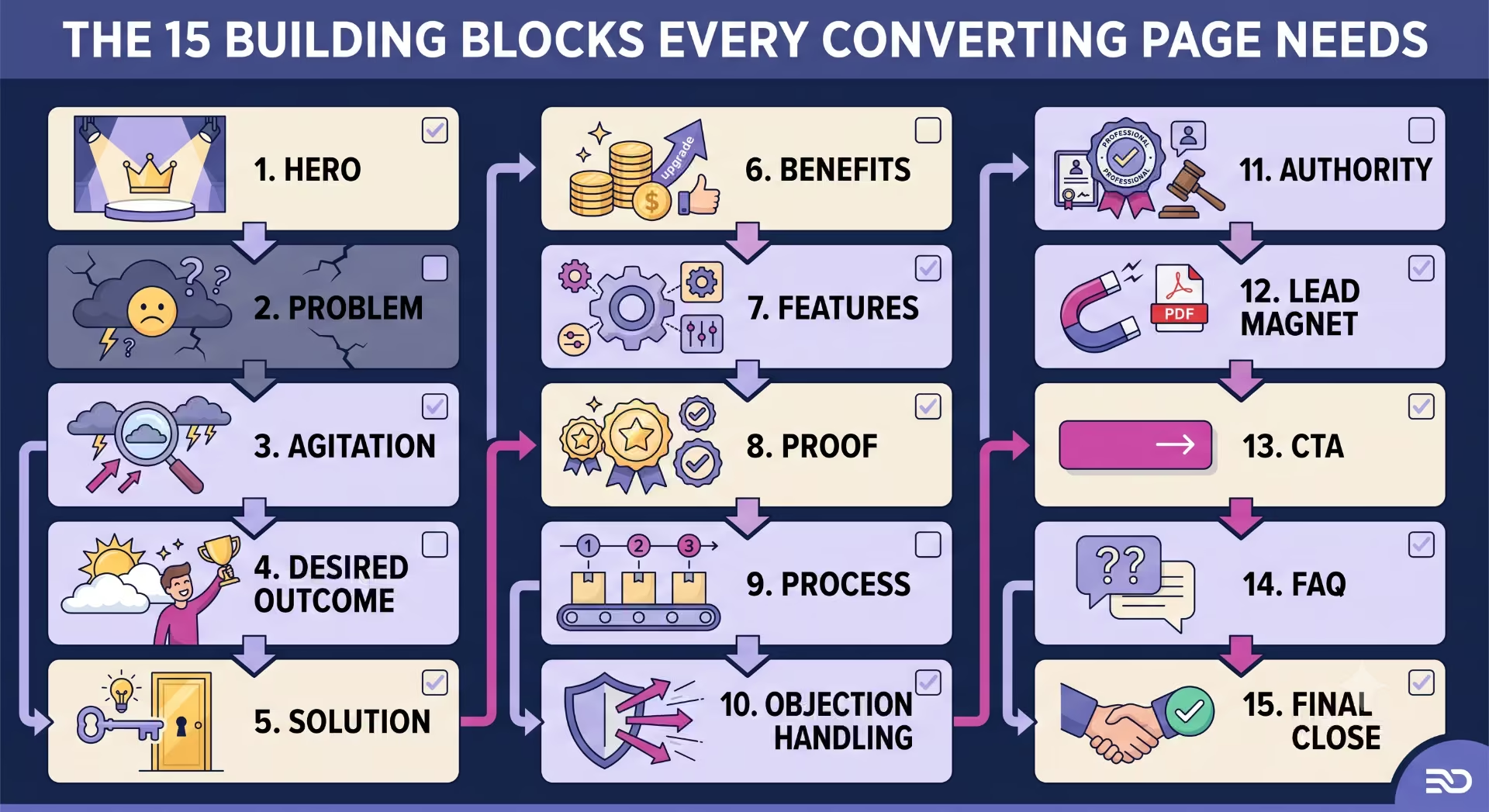
Here’s the master section library every converting page uses:
- Hero section — main promise, strong subheadline, primary CTA, supporting visual
- Problem section — state the pain clearly, show the cost of inaction
- Agitation section — deepen the emotional and business consequences
- Desired outcome section — paint the better future, show the transformation
- Solution section — introduce the offer, position it as the bridge
- Benefits section — translate features into outcomes, focus on business impact
- Features section — what they get, what’s included, scope and structure
- Proof section — case studies, testimonials, before/after results
- Process section — how it works, steps, phases, timeline
- Objection handling section — answer doubts, remove risk
- Authority section — your expertise, methodology, credentials
- Lead magnet section — audit, scorecard, checklist, diagnostic
- CTA section — main action, repeated strategically
- FAQ section — clarify objections, capture search intent
- Final close section — reinforce value, push the next step
Not every page needs all 15 blocks. But every high-converting page hits the psychological jobs those blocks represent.
The Psychology Behind the Sequence
Here’s what most designers miss: the order matters more than the design.
Image 5 — The Psychology Sequence Visual
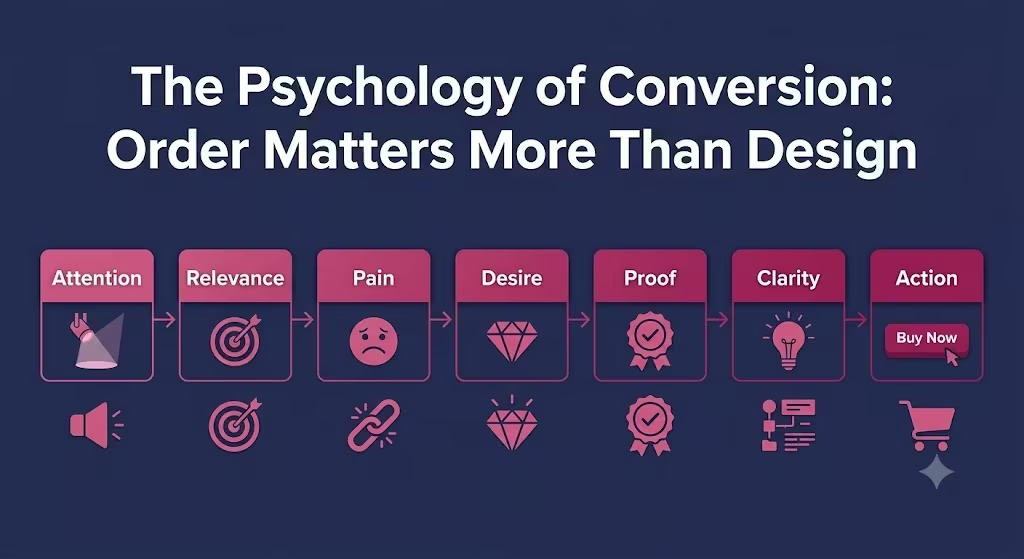
Placement: Inside “The Psychology Behind the Sequence” section Description: A horizontal flow diagram showing the psychological sequence: Attention → Relevance → Pain → Desire → Proof → Clarity → Action. Use arrows between each step. Highlight that order matters more than design. Use Iconic Digital World brand colors.
A high-converting landing page moves through this psychological sequence:
Attention → Relevance → Pain → Desire → Proof → Clarity → Action
This is how people actually make decisions. They need to know you’re talking to them. They need to feel the pain. They need to want the outcome. They need proof it works. They need clarity on what to do next.
A cold visitor needs more problem and proof. A warm visitor needs more desire and clarity. A premium buyer needs more trust, authority, and risk reduction.
This is why one-size-fits-all templates fail. The psychology has to match the visitor’s awareness level.
__________________________________________________
The 7 Frameworks That Drive Conversions
Over the years, I’ve studied and used 7 core frameworks that drive landing page conversions. Each one works for different situations, audiences, and offers.
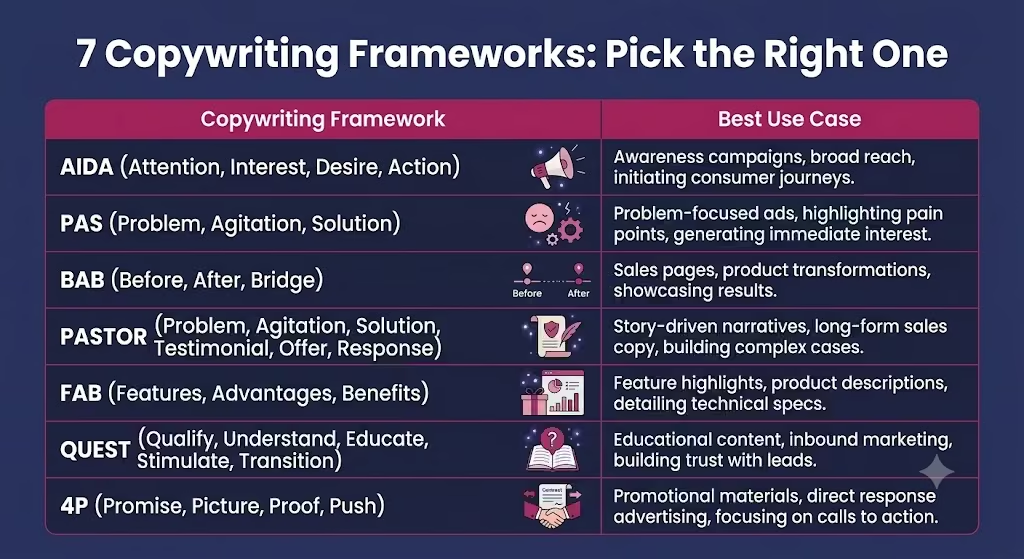
AIDA (Attention, Interest, Desire, Action)
AIDA is the cleanest framework for most landing pages because it matches how people decide.
- Attention — hero section, bold headline, primary CTA
- Interest — problem section, agitation, desired outcome
- Desire — benefits, proof, features, authority, process
- Action — CTA section, lead magnet, final close
AIDA is ideal for service pages, lead generation pages, and homepage-style landing pages.
PAS (Problem, Agitate, Solution)
PAS is powerful when the visitor already feels the pain and you want to intensify urgency.
- Problem — hero section, problem section, lead-in copy
- Agitate — agitation section, objection handling, cost of inaction
- Solution — solution section, benefits, proof, CTA
PAS is ideal for audit offers, conversion optimization services, and problem-aware traffic.
BAB (Before, After, Bridge)
BAB works beautifully for transformation selling.
- Before — problem section, current-state pain
- After — future state, business win, emotional relief
- Bridge — solution, benefits, process, proof, CTA
BAB is ideal for repositioning pages, outcome-focused services, and before/after storytelling.
PASTOR (Problem, Amplify, Story, Transformation, Offer, Response)
PASTOR is the most expansive and persuasive of the seven.
- Problem — hero, problem section
- Amplify — agitation, cost of inaction
- Story — brand story, client story, case study
- Transformation — benefits, proof, process
- Offer — solution, deliverables, lead magnet
- Response — final close, FAQ, objection handling, CTA
PASTOR is ideal for premium services, longer sales pages, and offers that need trust before conversion.
FAB (Features, Advantages, Benefits)
FAB is excellent when the service has multiple components that need translation into real value.
- Features — what’s included, service breakdown
- Advantages — process, authority, differentiation
- Benefits — benefits section, proof, CTA
FAB is ideal for service comparisons, productized services, and technical offers.
QUEST (Qualify, Understand, Educate, Stimulate, Transition)
QUEST is excellent for warming up leads before you pitch.
- Qualify — hero, target audience, who this is for
- Understand — problem, agitation, empathy-driven copy
- Educate — solution, authority, process, explainer
- Stimulate — benefits, proof, transformation
- Transition — CTA, final close, FAQ
QUEST is ideal for high-consideration services, educational offers, and complex solutions.
4P (Picture, Promise, Proof, Push)
4P is short, punchy, and direct-response friendly.
- Picture — hero, future state visual language
- Promise — solution, main offer statement
- Proof — testimonials, results, authority
- Push — CTA, lead magnet, urgency
4P is ideal for short landing pages, paid traffic, and fast decision pages.
Each framework is a proven path to building a high converting landing page for your specific offer.
__________________________________________________
Why Most Businesses Get This Wrong (And Why AI Makes It Worse)
The Designer vs. Strategist Problem
Here’s the core issue: most websites are built by designers, not conversion strategists.
Designers care about how a website looks. Strategists care about how a website converts. These are two completely different skill sets.
A beautiful website with no conversion strategy is like a gorgeous storefront with no sign, no door, and no products on the shelves. It looks great in screenshots. But it doesn’t make money.
Most service businesses hire a web designer, get a pretty website, launch it, and wonder why nothing happens. Then they hire a marketing agency to drive traffic to a website that was never built to convert in the first place.
Why AI Can’t Fix a Bad Website (The Rocket Without Direction)
This is where I need to be brutally honest with you: AI cannot fix a bad website.
I know that’s not what you want to hear. Everyone is selling AI website builders, AI copy generators, AI design tools. They promise you can build a landing page in minutes with AI. And technically, you can.
But here’s what they don’t tell you: AI generates content, not strategy. AI builds pages, not persuasion sequences. AI amplifies what’s already there, whether that’s good or bad.
If you give AI a bad brief with no strategy, no audience research, no conversion framework, it will produce a bad landing page faster. A bad website plus AI equals a faster bad website.
The Real Reason AI Fails: No Context, No Direction
The main reason AI can’t help is because it never gets the full picture. It gets little to no context about your business, your audience, your offer, or your goals.
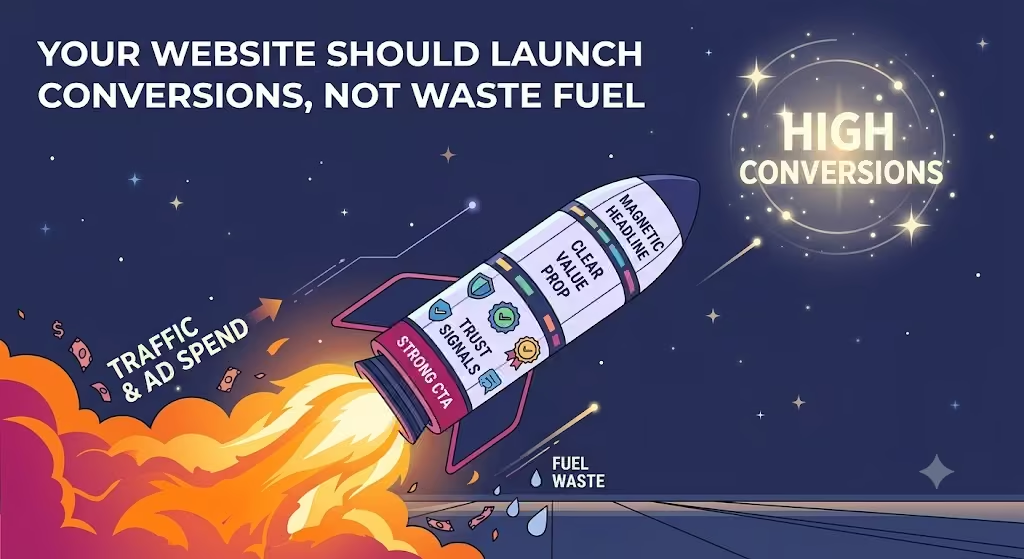
Think of AI like a rocket that’s all fueled up but without direction. It has the power to go anywhere. But without a destination, it takes off to any random place. It might launch. It might fly. But it won’t land where you need it to.
AI doesn’t know your ideal customer. It doesn’t understand your unique value proposition. It doesn’t know what makes your offer different. It doesn’t understand the psychology of your specific market.
Without strategy, AI just makes mistakes faster. And in marketing, fast mistakes burn money even faster.
The “Build It and They Will Come” Myth
The final mistake most businesses make is believing that launching a website is the finish line.
They build it. They launch it. They wait for leads to roll in. And when they don’t, they blame the ads, the market, or the economy.
But a website is never finished. It’s a living system that needs testing, tracking, and iteration. You need to know what’s working, what’s not, and how to fix it.
This is why most service businesses need more than a website. They need a Magnetic Growth System that includes the website, the follow-up automation, and the conversion strategy working together.
__________________________________________________
The MAGNET Test: Your Free Diagnostic
What It Is (And What It Reveals)
If you’ve read this far, you’re probably wondering: “How do I know if my landing page is actually the problem?”
Image 8 — The MAGNET Test Scorecard Preview
Placement: Inside “The MAGNET Test: Your Free Diagnostic” section Description: A preview/mockup of the MAGNET Test scorecard showing the 6 pillars (Magnetic Captivation, Authentic Connection, Guided Persuasion, Niche Alignment, Elegant Experience, Targeted Dominance) with sample scores. Use Iconic Digital World brand colors. Add a “Get Your Free Test” CTA overlay.
That’s exactly why I built the MAGNET Test.
The MAGNET Test is a free 6-pillar audit that scores your website across all 6 dimensions of the M6 MAGNET framework:
- Magnetic Captivation — does your headline stop the scroll?
- Authentic Connection — does your copy build trust?
- Guided Persuasion — does your page move visitors toward action?
- Niche Alignment — does your message speak to your specific audience?
- Elegant Experience — does your design support the conversion journey?
- Targeted Dominance — does your page dominate your competition?
The MAGNET Test reveals the silent leaks killing your conversions. It shows you exactly where your landing page is failing and what to fix first.
Why It Matters Before You Spend Another Dollar on Ads
Here’s the thing: you could keep spending money on ads and hoping things improve. Or you could get a clear diagnosis of what’s actually broken and fix it.
The MAGNET Test takes 5 minutes. It gives you a scored report across all 6 pillars. And it shows you the exact roadmap to turn your landing page into a conversion machine.
Before you spend another dollar on ads, get the MAGNET Test. Know exactly where your money is leaking. Then fix it.
__________________________________________________
What to Do Next (Your 3-Step Action Plan)
Step 1: Get Your Free MAGNET Test
Your first step is simple: get your free MAGNET Test audit.
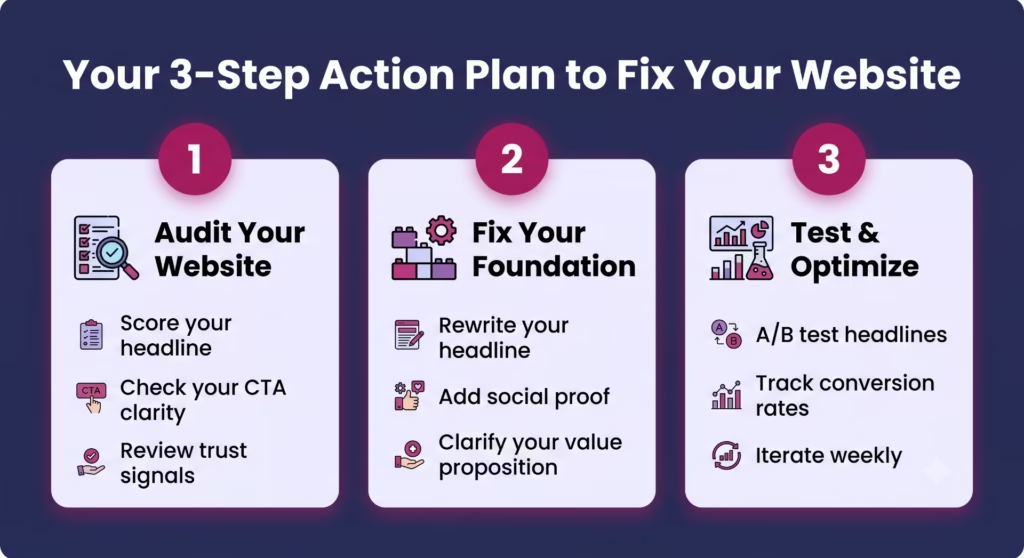
It takes 5 minutes. You’ll get a scored report across all 6 pillars of the M6 MAGNET framework. And you’ll know exactly what’s working, what’s not, and what to fix first.
Step 2: Book a Strategy Call
Once you have your MAGNET Test results, book a free 30-minute strategy call.
We’ll review your results together. I’ll show you what’s leaking conversions and how to fix it. And we’ll map out a clear plan to turn your landing page into a high-converting asset.
Book Your Free Strategy Call →
Step 3: Build Your High-Converting Landing Page
If you’re ready to stop guessing and start building a high converting landing page, the MAGNET Test is where it begins
The Magnetic Growth System is my done-for-you service that includes a high-converting landing page plus follow-up automation. It’s designed to bridge the trust gap so selling becomes a natural next step.
Learn About the Magnetic Growth System →
__________________________________________________
Frequently Asked Questions
How do I know if my landing page is the problem?
If you’re getting traffic but not conversions, your landing page is most often the problem. The MAGNET Test gives you a clear diagnosis across 6 dimensions so you know exactly what’s broken.
What’s the difference between a website and a landing page?
A website is your home base. It tells your story, shows your services, and builds authority. A landing page is a focused conversion tool designed to turn one specific visitor into one specific action.
How long does it take to fix a bad landing page?
Most landing page fixes take 2-4 weeks depending on the scope. A complete rebuild with new copy, design, and conversion strategy takes 4-6 weeks.
What if I already have a website?
That’s fine. Most service businesses have a website. The question is whether it’s built to convert. The MAGNET Test shows you exactly where your current website is leaking conversions.
How much does a high-converting landing page cost?
A high-converting landing page typically costs $2,000-$5,000 for the build, plus $297-$497/month for the follow-up automation system that nurtures leads after they convert.
Can I just use AI to rebuild my landing page?
AI can help with parts of the process, but it can’t replace strategy. Without a conversion framework, audience research, and persuasion sequence, AI just produces faster bad pages. The MAGNET Test shows you what AI can’t see.
What’s the MAGNET Test and how does it work?
The MAGNET Test is a free 6-pillar audit that scores your website across Magnetic Captivation, Authentic Connection, Guided Persuasion, Niche Alignment, Elegant Experience, and Targeted Dominance. It takes 5 minutes and gives you a clear roadmap to fix what’s broken.